

PROTECT YOUR DNA WITH QUANTUM TECHNOLOGY
Orgo-Life the new way to the future Advertising by Adpathway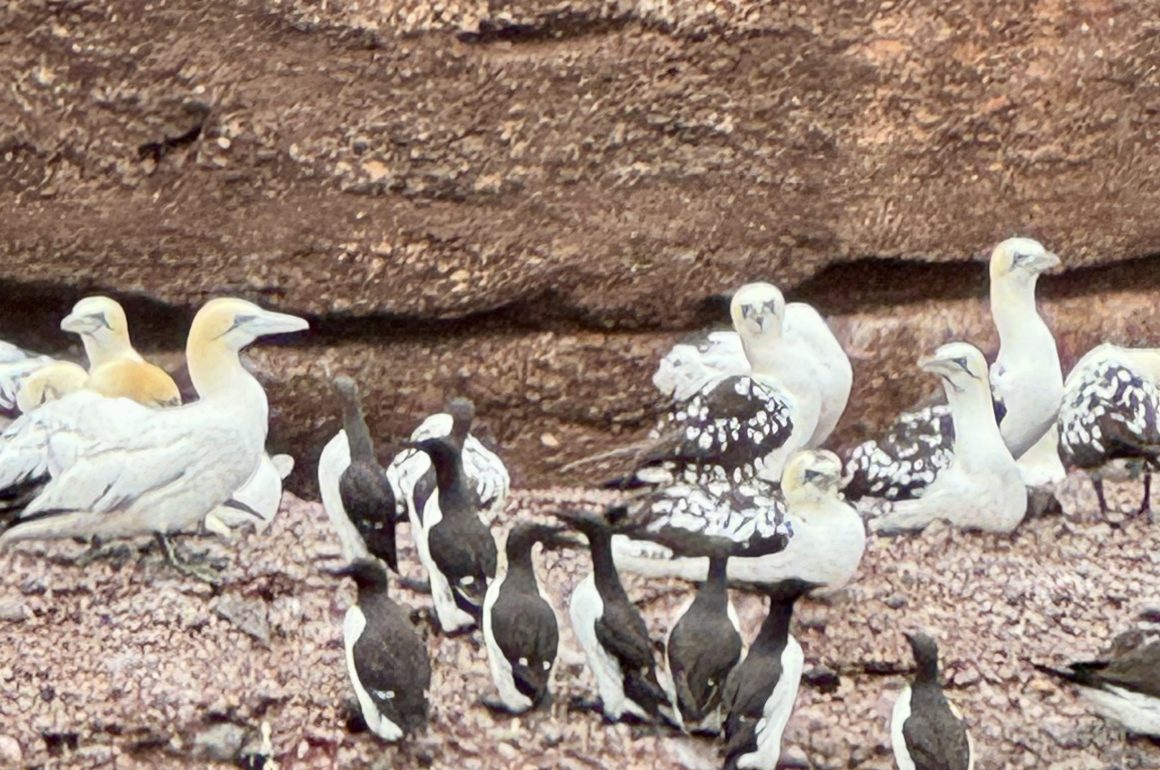
In my previous blog, I talked about the gannets of Bonaventure Island. In this article, I am writing about the other seabirds found in the area. On our second attempt to visit the island, we saw many birds flying around the shoreline or bobbing in the water. Also, there were many on the cliffs, some hiding in crevasses.
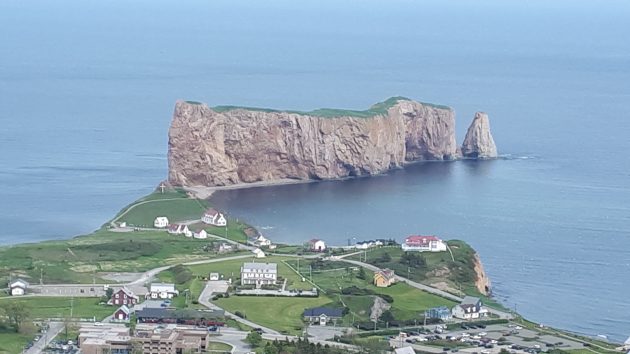
Percé Rock
We first motored past Percé Rock. It is a huge, sheer rock formation in the Gulf of St. Lawrence off the coast of Quebec. Carved by wind and tides, the rock is an iconic part of the Gaspé.
The waters offshore around the town of Percé and Bonaventure Island are rich with all types of food for the birds to feed their hungry young. The gannets dominate the best nesting spots on Bonaventure Island, but there is still plenty of real estate left for the other sea birds.
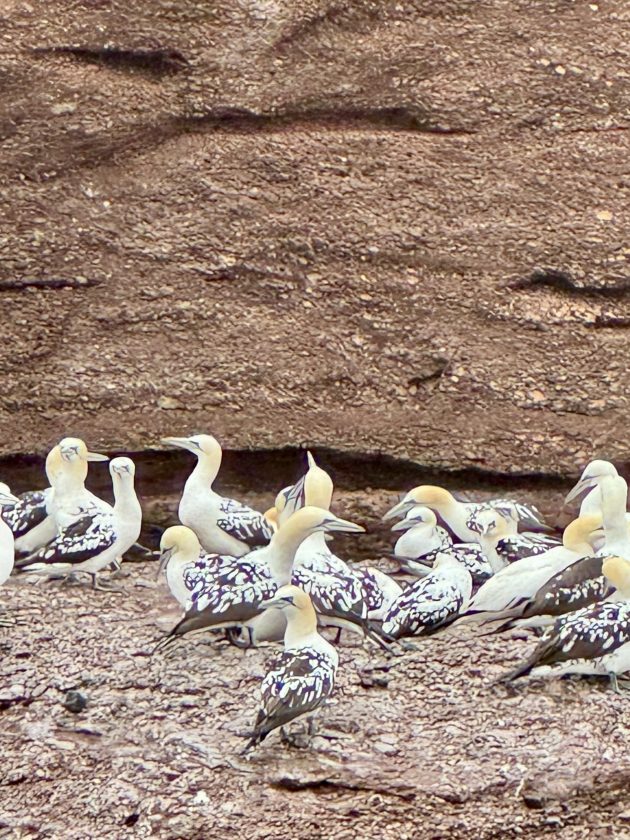
Immature Northern Gannets
We saw Black Guillemote. When they are courting, the male dances for a female. He shows off his red feet and the red of his throat, which proves his good health to her.

Black Guillemote
Joining the Black Guillemote were some Razorbills. These auks have a white band across their massive bill. When swimming, they hold their tails above water.
There were Common Murre, which are found in the same colonies as Razorbills. They sit upright on the sea cliffs looking like a northern version of the penguin.
Flying with the gannets were Black-legged Kittiwake. It is a small gull, with an unmarked, yellow bill. They nest snugly in cliff crevasses, to avoid predating Great Black-backed Gull, which are also in the area.

Black-legged Kittiwake
Of course, there were the ever-present Northern Gannets. The adults could be seen carrying seaweed to their nests. The immature gannets loafed on the rocks. They have five years before they join the breeding adults.
The final bird that caught my attention was the Common Eider. These large, sluggish sea ducks are found along northern coastlines. Later on our trip around the Gaspé, I saw large rafts of them floating offshore. They are a very social bird. The males are quite distinctive with their black and white plumage and their olive-grey bills.

Common Eider female and male
Even though the thought of going out on rough water was scary for me, I was brave because I wanted to see the amazing sight of the birds of Bonaventure Island. It did not disappoint.
Note: Several photos are from Wikipedia Commons, an online source of copyright-free photos: Black Guillemote by Charles J. Sharp; Black-legged Kittiwake by TRinaud; Common Eider by Jakub Halun. Picture of Percé Rock by Leslie Kinrys. Header photo and Immature Gannets by a friend.

Written by Leslie Kinrys
Leslie Kinrys has loved birds, since her father put a House Sparrow fledgling in her young hands. She lives and birds in Toronto, Ontario, Canada, with some trips farther afield. She enjoys seeing all species of birds, but her favourites are hummingbirds. Also, Leslie enjoys reading, listening to Country music, getting together with friends, and rooting for her baseball team: the Toronto Blue Jays.















 English (US) ·
  French (CA) ·