

 1 week ago
8
PROTECT YOUR DNA WITH QUANTUM TECHNOLOGY
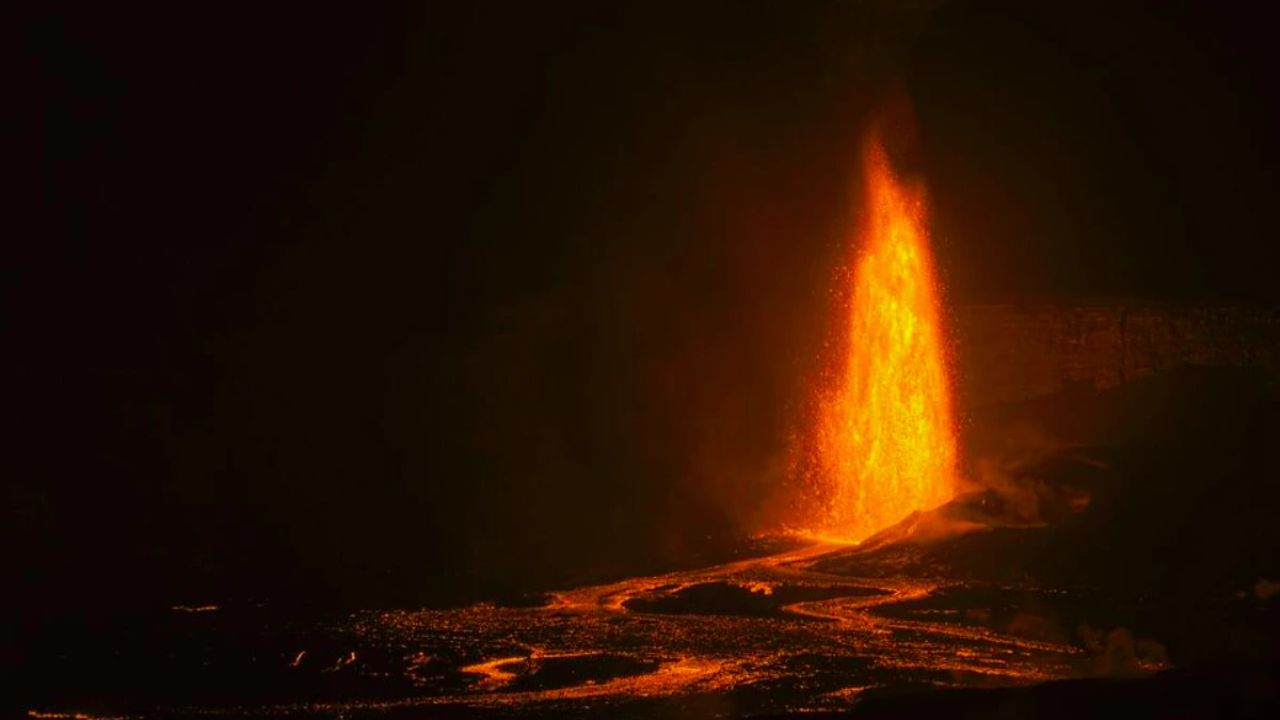
Orgo-Life the new way to the future Advertising by AdpathwayA single explosion lasting less than a minute at Alaska's remote Mount Gareloi has put the volcano back on scientists' watch list. The Alaska Volcano Observatory raised the Volcano Alert Level to ADVISORY and the Aviation Color Code to YELLOW on Oct. 1 after detecting the blast at 7:27 a.m. AKDT (15:27 UTC), according to the AVO daily update issued that afternoon.
As of AVO's most recent weekly update, issued at 12:07 p.m. AKDT on Oct. 2, both levels remained in place, and no further signs of unrest had been detected. No one lives on Gareloi Island, and the closest community, Adak, sits about 93 miles to the east.
The bigger question for most readers is aviation. Busy air routes between North America and Asia cross the Aleutian Islands, and volcanic ash is the main hazard Gareloi poses to people.
A Brief Blast From the South Crater
AVO detected the explosion in geophysical data rather than by eye. Clouds as high as about 20,000 feet above sea level hid the volcano that morning, so scientists could not confirm whether it produced an ash cloud. "If an ash cloud was produced, it would likely be minor," the observatory said, citing the blast's short duration.
Infrasound, which records low-frequency sound waves from explosions, pointed to the volcano's south crater as the source. In its Oct. 2 weekly update, AVO added that satellite radar images showed a small crater-like feature near the fumarole field on Gareloi's south flank.
Gareloi constantly vents magmatic gases from that fumarole field and usually shows low-level earthquake activity. AVO said those signs point to shallow magma interacting with a hydrothermal system, meaning underground water heated by magma. The observatory said the explosion likely reflects a change in that system.
Advisory and Yellow Explained
The U.S. Geological Survey uses two parallel scales. The Volcano Alert Level, aimed at people on the ground, runs from NORMAL to ADVISORY to WATCH to WARNING. The Aviation Color Code, aimed at pilots and air traffic controllers, runs from GREEN to YELLOW to ORANGE to RED.
ADVISORY and YELLOW mean a volcano is showing signs of elevated unrest above its known background level. They do not mean an eruption is underway or expected. A move to WATCH and ORANGE would signal escalating unrest with increased eruption potential, or an eruption with limited hazards, under the USGS Volcano Hazards Program's alert system.
AVO was direct about the limits of what it knows. In its Oct. 2 update, the observatory said "it is not clear that the likelihood of a volcanic eruption has increased." Scientists will keep monitoring to learn whether the change is tied to new magma moving in or to other shifts in the magma system.
That distinction matters for readers who see headlines about an "erupting" volcano. AVO has described a single short explosion, not a sustained eruption. There has been no ash advisory for communities and no reported impact on flights tied to the event.
Risk to Air Travel and the Western Aleutians
Gareloi is a stratovolcano that makes up all of Gareloi Island in the Delarof Islands group, about 1,242 miles west-southwest of Anchorage. It stands 5,161 feet tall. According to AVO, it has been among the most active volcanoes in the Aleutians since the 1740s, with 16 reports of eruptive activity since 1760. Its largest historical eruption, in 1929, opened a line of small craters from the southern summit to the coast and sent lava flows down the southeast flank.
AVO says Gareloi's eruptions commonly produce ash clouds and lava flows, and that airborne ash that could affect aircraft is the primary hazard. Ash can damage jet engines, scratch windshields and disrupt navigation instruments, which is why airlines and the Federal Aviation Administration track the Aviation Color Code closely.
Gareloi is not the only restless volcano in the region. Nearby Great Sitkin, about 26 miles east of Adak, remains at WATCH and ORANGE as a slow lava eruption that began in July 2021 continues inside its summit crater. Farther east, Shishaldin on Unimak Island remains at ADVISORY and YELLOW with low-level unrest, according to the same AVO update.
Those most likely to feel any effect from Gareloi are pilots and air carriers on North Pacific routes, crews of fishing and cargo vessels operating near the Delarof Islands, and Adak residents if a larger ash-producing eruption ever occurred and winds carried ash east.
Monitoring Ahead and What to Watch
Gareloi is watched by a local network of seismic and infrasound sensors, satellite data, and regional infrasound and lightning-detection networks, according to AVO's Gareloi page. Lightning detection matters because volcanic lightning can reveal an ash plume even when clouds block satellite and camera views.
Several things remain unknown. AVO has not confirmed whether any ash was released on Oct. 1, and it has not determined whether the event reflects new magma rising or a shallower change in the hydrothermal system. Persistent cloud cover over the Aleutians has limited satellite observations in the days since.
Signs that would raise concern include renewed explosions, a sustained increase in earthquakes or volcanic tremor, a rise in sulfur dioxide emissions, or an ash cloud spotted by satellites or pilots. Any of those could prompt AVO to raise levels further, and the observatory would issue a Volcano Observatory Notice for Aviation in that case.
For most people, no action is needed. Travelers with flights over the North Pacific should check with their airline if AVO raises the level, since carriers may reroute. Mariners near the Delarof Islands should watch for marine and ash advisories from the National Weather Service. Adak residents should follow AVO and local officials and keep basic supplies such as N95 masks on hand.
AVO issues daily updates when volcanoes are elevated and weekly summaries on Fridays, with the next weekly update expected Oct. 9. The bottom line: Gareloi produced a short, real explosion that justifies closer watching, but scientists have not said an eruption is more likely, and the main risk remains to aviation rather than to communities.
What Readers Want to Know
What happened at Gareloi Volcano?
AVO detected a single explosion lasting less than a minute at 7:27 a.m. AKDT on Oct. 1. It originated from the volcano's south crater.
What do ADVISORY and YELLOW mean?
They mean the volcano shows elevated unrest above its normal background level. They do not mean an eruption is happening or expected.
Did the explosion produce ash?
AVO could not confirm it because clouds hid the volcano. If ash was produced, the observatory said it would likely have been minor.
Is anyone in danger?
Gareloi Island is uninhabited. The nearest community, Adak, is about 93 miles east. The main hazard from any future eruption would be ash affecting aircraft.
Will flights be affected?
No flight impacts have been reported. If AVO raises the Aviation Color Code to ORANGE or RED, airlines may reroute North Pacific flights.
When is the next update?
AVO issues daily updates for elevated volcanoes and a weekly summary on Fridays. The next weekly update is expected Oct. 9.
© 2026 NatureWorldNews.com All rights reserved. Do not reproduce without permission.














 English (US) ·
 French (CA) ·