

 16 hours ago
8
PROTECT YOUR DNA WITH QUANTUM TECHNOLOGY
Orgo-Life the new way to the future Advertising by AdpathwayA natural compound found in tomatoes reduced markers of cellular aging in the brain, liver, and skin of elderly mice and improved their performance on memory tests, according to a Mayo Clinic-led study in EMBO Molecular Medicine. The compound, tomatidine, was added to the animals' food for three months starting at 21 months of age, which is old for a laboratory mouse.
The results come from mice, not people. Eating tomatoes or buying supplements will not reproduce the controlled dose used in the study, and no human trial has tested tomatidine for memory or aging. The work is one piece of a broader Mayo Clinic research program on senescent cells, nicknamed "zombie cells," which stop dividing but linger in tissues and release inflammatory signals linked to age-related disease.
The research drew renewed attention this week as a Mayo Clinic summary of seven aging studies circulated widely. Several of those papers date to 2024 and 2025, so this article focuses on two 2026 findings: the tomatidine mouse study and a Nature paper on how mitochondria help switch on the inflammation that senescent cells release.
Memory and Frailty Gains in 21-Month-Old Mice
The tomatidine study, led by first author Daniela Costa and senior author Diana Jurk of Mayo Clinic's Department of Neurology, was published online April 1. Researchers first screened compounds on senescent mouse cells, then fed aged male and female mice chow containing 0.05% tomatidine for three months, comparing them with untreated old mice and young 4-month-old controls.
Treated mice made fewer errors in a maze test of learning and spent more time exploring new areas in a test of spatial working memory. They also performed better on a pole test of coordination and scored lower on a 27-item frailty index. They did not improve on a rotarod endurance test, and skin thickness did not change.
In tissue, treated mice had fewer cells carrying senescence markers in the liver, skin, hippocampus, cortex and the cells lining brain blood vessels. They also had fewer and smaller activated immune cells in the hippocampus and lower levels of inflammatory signals. The authors reported no adverse effects over the three months.
The brain's blood vessels showed some of the clearest changes. Cells lining those vessels in treated mice carried fewer senescence markers and produced more ZO-1 and claudin-5, proteins that help seal the blood-brain barrier. Two other barrier proteins did not change significantly, and the researchers did not directly test whether the barrier itself became less leaky.
Calming Inflammation Rather Than Killing Cells
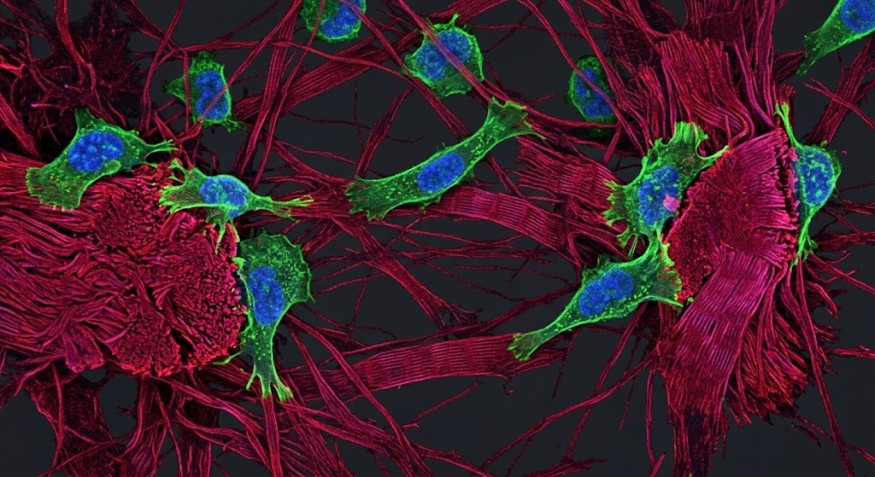
The study's laboratory work suggests tomatidine acts mainly as a senomorphic compound, meaning it dampens the inflammatory output of senescent cells rather than destroying them. In human cells, it reduced inflammatory genes such as IL-6 and IL-8 without lowering standard senescence markers, and it did not kill senescent brain blood-vessel cells.
That distinction matters for how such drugs might eventually be used. Senolytic drugs aim to clear senescent cells, while senomorphic approaches try to quiet them, and the two strategies carry different potential risks. Marissa Schafer, a Mayo Clinic researcher whose lab directed several of the studies, said: "This body of work is moving the aging field forward."
A Mitochondrial Switch Behind Zombie-Cell Inflammation
The second 2026 finding, published in Nature and led by first author Helene Martini with senior author João Passos, looks at why senescent cells stay inflamed. Passos's lab had shown earlier, in a 2025 study, that damaged mitochondria leak DNA and RNA that set off immune alarms inside the cell.
The new paper adds a second requirement. Senescent cells ramp up production of acetyl-CoA, a molecule made through mitochondrial metabolism, which helps loosen the packaging around inflammatory genes so they can be strongly expressed. Martini described it as "a metabolic signal from mitochondria that changes how inflammatory genes are turned on," according to AZoLifeSciences.
Blocking a mitochondrial transporter called SLC25A1 cut that acetyl-CoA supply and limited inflammatory gene activation in the researchers' experiments, even when the initial alarm signals were present. That identifies a possible drug target, not a tested treatment.
Mouse Results with Clear Limits
The tomatidine study is a peer-reviewed animal and cell study. It did not directly measure whether the blood-brain barrier became less leaky, did not identify tomatidine's molecular targets and did not include long-term toxicology or safety testing, the authors noted. Its single-cell genetic analysis pooled hippocampal samples from four animals per group, a small number.
Many treatments that help aging mice fail in people, and mouse maze performance is a limited stand-in for human memory. Mayo Clinic's own news release described the findings as preclinical and said more research is needed before they can guide patient care. The summary did not list study-specific funding, though the broader senescence mapping effort, SenNet, is supported by the NIH Common Fund.
For readers, the practical takeaway is restraint. Tomatoes are a healthy food, but this research does not show that eating more of them protects memory. Anyone considering supplements marketed for aging or brain health should talk with a doctor first, since products are not tested the way prescription drugs are — and doses in mouse chow do not translate directly to people.
The next steps are likely to include longer animal studies, toxicology testing, and work to pinpoint how tomatidine acts. The bottom line is that a tomato compound quieted aging cells and sharpened memory in old mice — a promising lead for aging research, but one that has not yet been tested in a single human patient.
What Readers Want to Know
What is tomatidine?
It is a natural compound found in tomatoes and tomato plants. In this study, it was given to mice as 0.05% of their food for three months.
What are senescent or "zombie" cells?
They are cells that stop dividing but do not die, and they release inflammatory signals linked to age-related diseases.
What did the mouse study find?
Old mice fed tomatidine had fewer senescence markers in several tissues, did better on two memory tests and a coordination test, and scored lower on a frailty index.
Did tomatidine kill senescent cells?
Lab tests suggest it mainly calmed their inflammatory output rather than killing them.
Should I eat more tomatoes or take tomatidine supplements?
The study does not support that. Its results are in mice, and supplement use should be discussed with a doctor.
What did the Nature paper add?
It found that senescent cells need a mitochondrial metabolite, acetyl-CoA, to fully switch on inflammatory genes, pointing to a possible drug target.
When could this reach people?
No human trials have been announced. Long-term safety and mechanism studies would come first.
© 2026 NatureWorldNews.com All rights reserved. Do not reproduce without permission.
















 English (US) ·
 French (CA) ·