

 14 hours ago
9
PROTECT YOUR DNA WITH QUANTUM TECHNOLOGY
Orgo-Life the new way to the future Advertising by AdpathwayLiving cells in human breast milk process nutrients in strikingly different ways, a new imaging study from the University of Western Australia has found. Tracking labeled glucose and amino acids at the scale of single cells, researchers saw some immune cells in milk turning glucose into fat droplets, while milk-producing cells actively released protein and burned energy, according to a UWA release dated Oct. 27.
The results, published in ACS Nano, point to milk as a living system rather than simply a mix of nutrients. Scientists have known for years that milk contains cells, but they have had little evidence about what those cells actually do once milk is produced.
That question matters for parents, pediatricians, and donor milk banks. If milk cells help shape milk composition and protect infants from infection, understanding them could eventually inform lactation care and how milk is handled and stored.
Watching Nutrients Move Through Single Cells
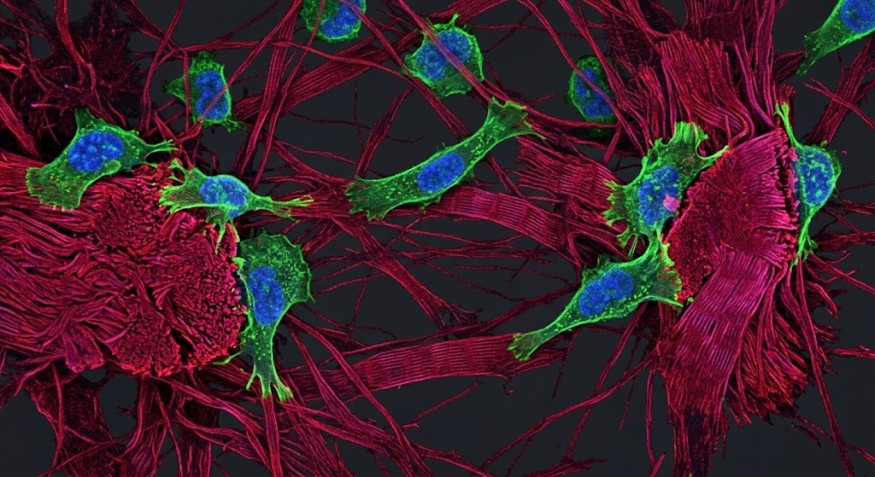
The team combined three tools. Confocal and electron microscopy showed each cell's structure. Nanoscale secondary ion mass spectrometry, known as NanoSIMS, mapped where chemical elements and labeled nutrients ended up inside individual cells. Single-cell RNA sequencing revealed which genes those same cell types were using.
The tracing used stable isotopes, harmless, non-radioactive forms of atoms that act as tags. When cells take up a tagged glucose or amino acid molecule, the tag can be followed into fats, proteins or other products. That lets researchers see function, not just appearance.
Lead author Qiongxiang (Lynn) Lin, a doctoral candidate at UWA, described "an incredibly complex biological system containing many different types of living cells," in comments reported by Xinhua. The study focused on lactocytes, the cells that make milk, and on immune cells including neutrophils, macrophages and dendritic cells.
Different Cells, Different Jobs
The clearest surprise involved macrophages, immune cells better known for engulfing microbes and debris. In milk, macrophages converted glucose into fat droplets and switched on genes involved in handling fat. That suggests these cells may contribute to the fat content of milk, an unexpected role for an immune cell.
Lactocytes were highly active, producing milk components, releasing protein, and using both energy and fat. Their activity fits their known job, but the imaging showed it at a level of detail previously difficult to achieve.
That detail comes from linking several kinds of data for the same cell types. Dr. Kai Chen of UWA's School of Biomedical Sciences said the approach lets researchers "connect cell identity with structure and function," rather than describing cells only by their shape or by the genes they express. For milk research, which has often relied on measuring bulk nutrients, that is a shift toward understanding which cells contribute what.
Neutrophils, another type of immune cell, contained high levels of sulfur and iron. Professor Donna Geddes, director of UWA's Centre for Human Lactation Research and Translation, highlighted that finding in the release. The researchers link those elements to bacteria-killing activity, which could help protect infants from infection, though the study did not directly test protection.
What the Study Does Not Show
This is laboratory imaging of milk samples, not a clinical study of infants. The UWA materials did not report how many mothers donated milk, and the summary did not describe the study's limitations. The connections between cell chemistry and infant health are interpretations based on what the cells appear to be doing.
The study does not compare breast milk with infant formula, and it makes no claims about formula. Parents who use formula, combine feeding methods, or rely on donor milk should not read it as a judgment on their choices. Pediatricians and lactation consultants remain the right sources for feeding decisions.
Donor milk raises a specific question the study did not address. Milk banks commonly pasteurize donated milk to make it safe, a process that generally inactivates living cells. Whether losing those cells matters for infant health is an open research question — and one this new imaging platform could help investigate, without suggesting any change to current safety practices.
Next Questions for Milk Research
The researchers say their platform can now be used to study how milk cells differ between mothers, how they change over the course of breastfeeding and whether conditions such as gestational diabetes alter them. Gestational diabetes is common in pregnancy, so that line of research could have broad relevance if it finds meaningful differences.
Associate Professor K. Swaminathan Iyer, director of the ARC Training Centre for Biomedical Analysis, said in the university release that the team wants to learn whether such conditions change the cellular and metabolic makeup of milk. Other open questions include how milk cells shift between early colostrum and mature milk, how long they survive after milk is expressed and stored, and whether they remain active inside an infant's gut.
Larger studies with clearly reported donor numbers and health outcomes would be needed before any findings shape clinical advice. Funding for the work was not stated in the university's release.
For now, families do not need to change anything. Parents with questions about breastfeeding, milk supply, or donor milk can talk with their pediatrician, an international board-certified lactation consultant, or their hospital's lactation services. The bottom line is that breast milk carries active cells with distinct chemical jobs, from making fat to fighting bacteria — a reminder that milk is biologically richer than a nutrient label suggests, and a promising area for research that is still at an early stage.
What Readers Want to Know
Does breast milk contain living cells?
Yes. Human milk contains milk-producing cells and several kinds of immune cells, including neutrophils, macrophages, and dendritic cells.
What did the new study find?
Individual milk cells used nutrients differently. Macrophages turned glucose into fat droplets, and neutrophils carried high levels of sulfur and iron.
How did researchers see this?
They combined microscopy, NanoSIMS imaging, and stable-isotope tracing with single-cell gene analysis.
Does this mean formula is worse?
The study did not examine formula and makes no claims about it. Talk with a pediatrician about feeding choices.
What does it mean for donor milk?
The study did not address donor milk. Pasteurization keeps donor milk safe, and whether losing living cells matters is an open question.
What comes next?
Researchers plan to study differences between mothers, changes during breastfeeding and effects of conditions such as gestational diabetes.
© 2026 NatureWorldNews.com All rights reserved. Do not reproduce without permission.















 English (US) ·
 French (CA) ·