

 15 hours ago
9
PROTECT YOUR DNA WITH QUANTUM TECHNOLOGY
Orgo-Life the new way to the future Advertising by AdpathwayA woman who lived about 30,000 years ago in what is now southwestern France carried ancestry from both western and central-eastern European populations, showing that Ice Age groups across the continent were in genetic contact, according to a study published Oct. 23 in Science Advances. Her remains, from Isturitz Cave in the French Basque Country, yielded the oldest genome-wide dataset yet for a modern human in southwestern Europe.
The same team recovered human DNA from a degraded tooth at Chufín Cave in northern Spain and, more strikingly, from cave sediment at El Mirón Cave in Cantabria, where no human bones or teeth were found. That sediment result shows researchers can read human ancestry from dirt alone, opening a window on periods and places where skeletons are missing.
The findings matter for understanding how people survived one of the harshest climate swings in human history. They describe populations living through the run-up to the Last Glacial Maximum, when ice sheets reached their greatest extent, and much of northern Europe became uninhabitable.
Mixing Between East and West
Most of the Isturitz woman's ancestry came from a western European lineage, but she also carried a component tied to central and eastern European populations, according to a University of Vienna release. Genetic modeling dates that mixing to roughly 32,500 to 31,500 years ago. A similar signal appeared in a previously studied individual from Ormesson, near Paris.
First author Pere Gelabert of the University of Vienna's Department of Evolutionary Anthropology said "Eastern and western European populations were not as genetically isolated as previously assumed." Senior author Ron Pinhasi led the international team, which included about 40 co-authors from institutions in Europe and the United States.
Combined with archaeological evidence, the authors suggest Isturitz may have been a meeting place for different groups during the Gravettian period, a culture known for carved female figurines and long-distance exchange of materials. That interpretation is a proposal, not a proven conclusion.
Reading Ancestry From a Tooth and From Dirt
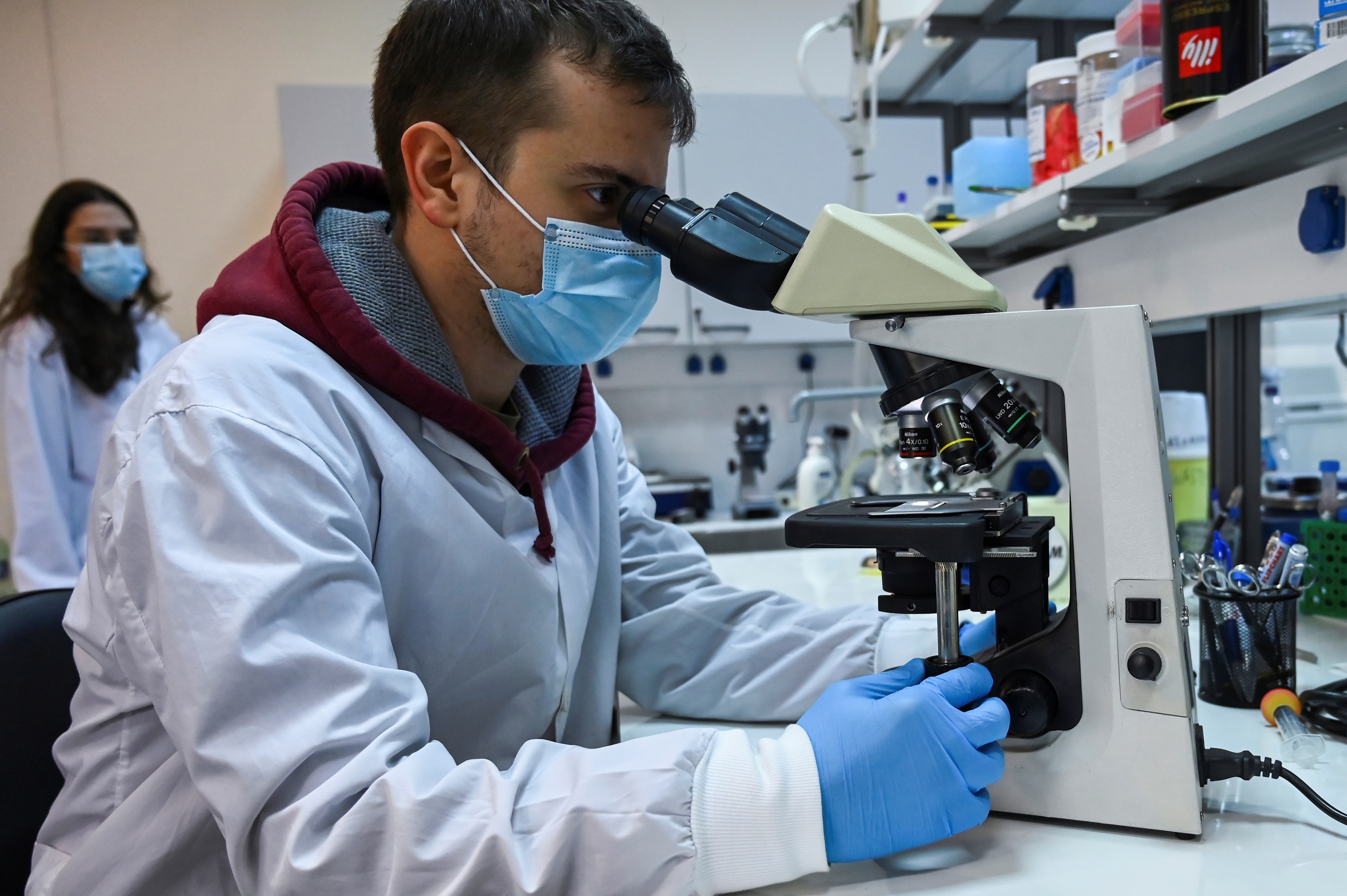
Ancient DNA survives as short, chemically damaged fragments. Researchers grind a small amount of bone or tooth, extract what genetic material remains, sequence millions of fragments and compare them with reference genomes. The Isturitz sample was well enough preserved to yield more than 454,000 variable positions, according to a detailed account by The Brighter Side of News.
The Chufín tooth, from an adult woman who lived about 26,000 years ago, was badly degraded and produced far fewer usable markers. Even so, it supported a western-related ancestry persisting in northern Spain. To guard against contamination from modern people, the team kept only DNA molecules showing the characteristic chemical damage of ancient material.
El Mirón was the biggest technical leap. From a sediment layer dated to about 22,000 years ago, the team generated more than a billion sequencing reads and selected 14,737 human genetic markers, enough to match the DNA to a western lineage. Earlier work at the cave had recovered only mitochondrial DNA. Pinhasi said sedimentary DNA "allows us to recover genetic information from periods where human remains are missing," according to Scientific Frontline.
Iberia as an Ice Age Refuge
The El Mirón result shows western ancestry persisting in Cantabria through the Last Glacial Maximum. That supports the long-standing idea that the Iberian Peninsula served as a refuge where people rode out the coldest millennia before resettling northern Europe as the climate warmed.
The study also reported a family detail from southern Italy. A fetus known as Ostuni1b was most likely the son of a previously studied woman, Ostuni1. His father probably came from the same broad population, but the parents were not closely related, which suggests mating patterns that helped limit inbreeding in small groups.
Climate shaped where these people could live and whom they met — and the timing matters. The Last Glacial Maximum is generally placed between roughly 26,000 and 19,000 years ago, so the Chufín and El Mirón samples fall just before and during that deep freeze, while the Isturitz woman lived several thousand years earlier. The genetic record suggests that even as ice advanced, groups moved across hundreds of miles and exchanged partners rather than surviving as isolated pockets.
Small Samples and Open Questions
The study sequenced just three individuals, and DNA has been recovered from only about two dozen Gravettian skeletons overall, Live Science noted. The East-West conclusion rests heavily on the Isturitz woman and the Ormesson individual, and the Ormesson timing estimate was not statistically significant.
Sediment DNA has its own limits. A layer of cave dirt can contain DNA from many people mixed together, so El Mirón offers an ancestry signal, not a single person's genome. The mixing date also assumes a single pulse of gene flow, and an older eastern component already present in the west cannot be ruled out because earlier southwestern genomes are missing.
For readers, there is no practical action, but there is a takeaway about method. Cave sediment from sites around the world, including caves in the Americas, may hold human DNA even where bones are gone — a tool that could fill major gaps in the human story. The next steps include sampling more sediment layers and more Gravettian sites, especially in regions where skeletons from this period have never been found. The bottom line is that a 30,000-year-old genome and a handful of cave dirt show Ice Age Europeans were more connected than once thought, though the picture still rests on very few people.
What Readers Want to Know
Who was the Isturitz woman?
A woman who lived about 30,000 years ago in southwestern France. Her genome is the oldest genome-wide dataset of a modern human from that region.
What did her DNA show?
Mostly Western European ancestry, plus ancestry linked to central and eastern European populations, from mixing about 32,500 to 31,500 years ago.
How can DNA come from cave dirt?
People shed DNA into their surroundings. At El Mirón, researchers extracted and filtered ancient human DNA from a 22,000-year-old sediment layer.
Why is Iberia important in this story?
The El Mirón results support the idea that Iberia was a refuge where people survived the coldest part of the last Ice Age.
When was the study published?
It was published Oct. 23, 2026, in Science Advances.
How strong is the evidence?
It rests on three newly sequenced individuals and one earlier genome, so the conclusions are suggestive rather than settled.
© 2026 NatureWorldNews.com All rights reserved. Do not reproduce without permission.














 English (US) ·
 French (CA) ·