

 13 hours ago
12
PROTECT YOUR DNA WITH QUANTUM TECHNOLOGY
Orgo-Life the new way to the future Advertising by AdpathwayCommercial adoption of bacterial biocontrol agents across Brazilian agriculture underwent an unprecedented expansion between the 2019/2020 and 2024/2025 crop seasons, establishing the genus Bacillus as the preeminent biological countermeasure against plant diseases. According to comprehensive market data and regulatory analyses published in the Brazilian Journal of Microbiology, the potential area treated with Bacillus-based formulations climbed from 7,576,610 hectares in 2020 to 37,194,240 hectares in 2025, marking an overall growth of approximately 391 percent over six consecutive seasons. Simultaneously, commercial turnover generated by these microbial products rose from 114.31 million dollars to 403.17 million dollars, representing a 252 percent increase. Researchers determined that Bacillus products accounted for approximately 48 percent of the entire Brazilian biological control sector by the conclusion of the survey period, demonstrating that nearly half of the nation’s biocontrol investments are centered on this single endospore-forming genus.
To map this phytosanitary transition at the end-user level, market investigators deployed structured, face-to-face interview protocols across major Brazilian agricultural regions. Conducted by Kynetec across six crop seasons from 2019/2020 through 2024/2025, the research panel surveyed between 14,839 and 15,903 farming operations annually, culminating in 15,708 structured interviews during the 2024/2025 cycle alone. The quantitative sampling framework stratified farming enterprises by landholding scale and regional production volume across soybean, corn, sugarcane, cotton, coffee, rice, common bean, wheat, citrus, and eucalyptus. Statistical evaluations performed using IBM SPSS software confirmed a steady increase in biological adoption: while only 30 percent of surveyed farmers and managers utilized biocontrol agents during the 2019/2020 harvest, that proportion climbed systematically to 36 percent, 39 percent, 43 percent, 48 percent, and ultimately 52 percent by 2024/2025. This documented shift indicates that biological disease and pest management has become a majority practice among Brazilian agricultural producers across a total cultivated footprint that expanded from 78,564,000 hectares in 2020 to 96,102,000 hectares in 2025.
The growth dynamics of microbial biocontrol diverged markedly from the broader agrochemical market during the latter stages of the evaluated window. While the total turnover for all Brazilian crop protection inputs, including synthetic agrochemicals, rose from 13,775 million dollars in 2020 to 18,395 million dollars in 2025 with an eight percent compound annual growth rate, it experienced a 7.6 percent contraction between 2024 and 2025 after peaking at 21,364 million dollars in 2023. In contrast, the biocontrol sector sustained consistent upward momentum, recording a 21 percent compound annual growth rate as biological sales advanced from 271.63 million dollars in 2020 to 855.68 million dollars in 2025. Bacillus products maintained an even steeper trajectory, advancing at a 23 percent compound annual growth rate. Within the biocontrol segment, the market share captured by Bacillus formulations rose from 42 percent of total turnover in 2020 to 47 percent in 2025, while their proportion of the potential area treated with biologicals expanded from 34 percent to 43 percent across the same timeframe.
An exhaustive audit of national regulatory registrations identified 297 Bacillus-based commercial formulations marketed by 42 distinct corporate registrants in Brazil through December 2025. These registered products incorporate 126 distinct bacterial strains as active biological ingredients, with Bacillus subtilis leading registration numbers with 31 strains, closely followed by Bacillus amyloliquefaciens with 27 strains, Bacillus velezensis with 25 strains, Bacillus licheniformis with 10 strains, and Bacillus pumilus with 10 strains. Additional authorized active species include Bacillus thuringiensis with five registered strains, Priestia megaterium with five strains across separate listings, Cytobacillus firmus, Bacillus paralicheniformis, and Bacillus methylotrophicus with two strains each, alongside single strain registrations of Niallia circulans, Priestia aryabhattai, Bacillus haynesii, Bacillus inquosorum, Brevibacillus parabrevis, Paenibacillus azotofixans, and Paenibacillus ottowii. Commercial preparations are formulated as suspension concentrates, water-dispersible granules, soluble concentrates, wettable powders, slurry seed treatment powders, emulsifiable concentrates, and emulsifiable gels, which are applied via in-furrow delivery, seed dressing, soil drenching, and foliar spray equipment.
Field adoption patterns reveal pronounced divergence in commercial dominance among individual bacterial species and emerging multi-strain consortia. In terms of treated footprint, Bacillus amyloliquefaciens proved to be the single most widely utilized active ingredient in 2025, covering 13,871,490 hectares and generating 172.01 million dollars in sales. Bacillus subtilis followed with 3,352,440 hectares and 36.27 million dollars, while Bacillus pumilus accounted for 2,861,570 hectares and 25.80 million dollars. Bionematicidal and insecticidal applications of Bacillus thuringiensis occupied 4,200,320 hectares with 37.43 million dollars in turnover, while Cytobacillus firmus and Bacillus velezensis encompassed 1,624,020 and 1,598,270 hectares, respectively. Concurrently, microbial consortia expanded significantly, with multi-species Bacillus mixtures reaching 5,568,000 hectares and 68.78 million dollars in 2025, dominated by combinations of B. pumilus, B. subtilis, and B. velezensis. Multi-kingdom consortia combining Bacillus strains with antagonistic fungi such as Trichoderma harzianum, Trichoderma asperellum, and Paecilomyces lilacinus also gained ground, including a dual consortium of B. amyloliquefaciens and Trichoderma that reached 1.35 million hectares.
The underlying agronomic success of Bacillus in intensive subtropical cropping systems stems largely from unique cytological adaptations, most notably endospore formation. This intrinsic resilience translates directly into commercial formulation stability, providing packaged products with shelf lives that regularly exceed two years under warehouse storage conditions without significant loss of vegetative viability. Furthermore, endospores confer broad physical and physiological compatibility with synthetic crop inputs, enabling growers to tank-mix Bacillus suspensions directly with synthetic fungicides, herbicides, and insecticides.
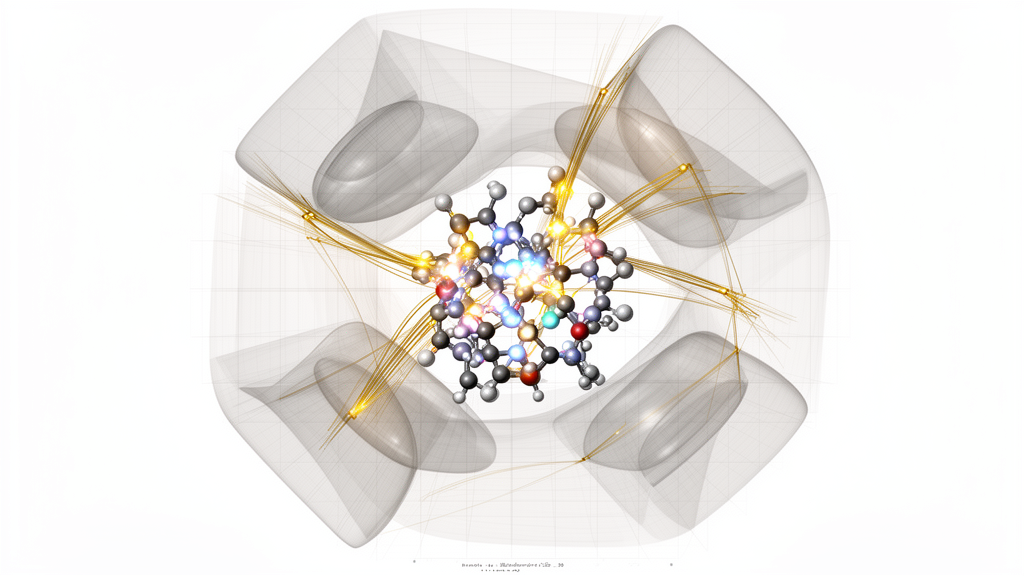
The direct suppression of phytopathogens by Bacillus species is driven by potent biosynthetic gene clusters that allocate significant genomic architecture to antimicrobial metabolite synthesis. Genomic investigations indicate that up to 12 percent of the Bacillus genome is dedicated to bioactive metabolite assembly, comprising 4 to 5 percent in B. subtilis strains, 8.5 percent in B. amyloliquefaciens, and between 2.29 and 10 percent in B. velezensis. These pathways synthesize ribosomal bacteriocins that disrupt pathogen cell wall synthesis or form membrane pores, alongside structurally diverse non-ribosomal cyclic lipopeptides belonging to the iturin, fengycin, and surfactin families. Iturins and related amphiphilic lipopeptides form ion-conducting transmembrane pores in fungal membranes, causing rapid electrolyte leakage and cell lysis. In addition, Bacillus strains synthesize low-molecular-weight siderophores displaying association constants for ferric iron between 10 to the 23rd and 10 to the 52nd power, sequestering bioavailable soil iron via membrane FeuA receptors to starve pathogens while sparing plants, alongside cell-wall degrading chitinases, beta-glucanases, proteases, and lipases.
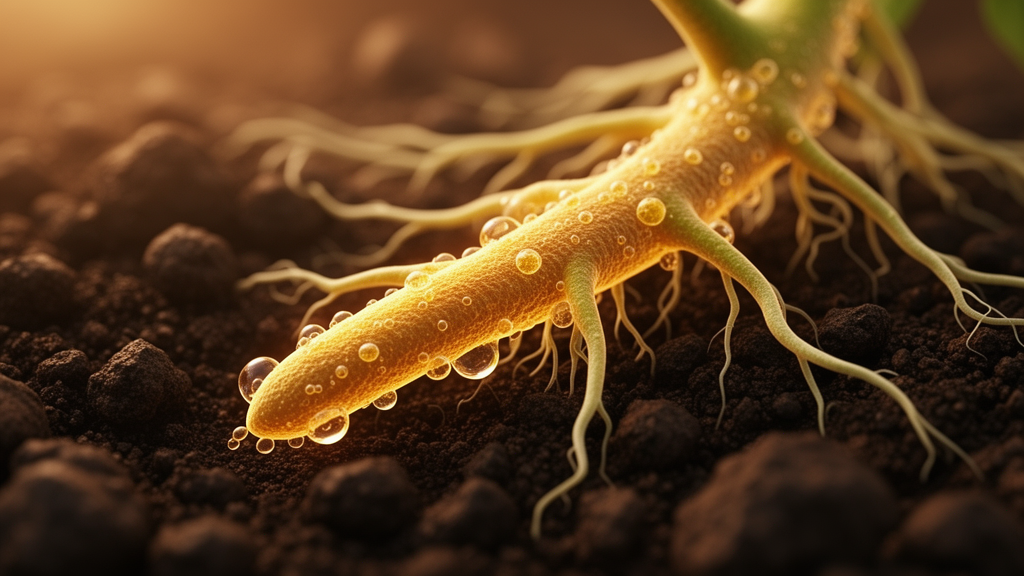
Beyond direct chemical antagonism, Bacillus strains demonstrate exceptional niche exclusion capabilities on both phylloplane and rhizoplane surfaces. The bacteria exhibit rapid radial growth rates between two and five millimeters within 24 hours, giving them a distinct spatial colonization advantage over slower-growing fungal mycelia that expand at five to twenty millimeters per day. As bacterial cell densities increase, autoinducers coordinate collective cellular behaviors, embedding populations within a resilient exopolymeric matrix that forms continuous protective biofilms over plant tissues. In foliar environments, these aggregates concentrate near stomatal apertures, anticlinal cell junctions, substomatal cavities, and trichome bases, physically blocking pathogen penetration. In the rhizosphere, biofilms form dense sleeves around root elongation zones and micro-wounds, establishing a localized physico-toxic barrier that restricts soil-borne ingress. Seed dressings similarly coat the emerging spermosphere, allowing proliferating bacteria to colonize radicle tissues immediately upon seed coat rupture and establish durable suppression against damping-off and root-lesion pathogens.
The protective scope of Bacillus is further amplified by indirect biological mechanisms that interrupt pathogen communication and prime systemic host immunity. Concurrently, bacterial contact triggers endogenous plant defense cascades, activating both systemic acquired resistance through salicylic acid-dependent pathways and induced systemic resistance mediated by jasmonic acid and ethylene networks.
These coordinated, multi-site modes of action position Bacillus preparations as foundational components of Integrated Crop Protection strategies rather than standalone replacements for synthetic chemistry. Unlike site-specific synthetic fungicides such as demethylation-inhibiting triazoles that target a single enzyme, sterol 14-alpha-demethylase, Bacillus exerts simultaneous physiological, enzymatic, spatial, and immunological pressures on pathogen communities. Tank mixtures and rotational schedules combining triazoles with Bacillus formulations achieve complementary modes of action: chemical actives inhibit fungal ergosterol biosynthesis while bacterial lipopeptides disrupt membrane integrity and biofilms prevent re-colonization. This multi-layered pressure substantially dilutes directional selection for chemical resistance among pathogen populations while enhancing overall disease suppression. Supported by rigorous multi-year surveys and evolving regulatory frameworks, the rapid trajectory of Bacillus products in Brazil provides an empirical model for scaling biological pest management across large-scale global agriculture without sacrificing commercial yields or agronomic efficiency.
Subject of Research: Market expansion and multi-site biocontrol mechanisms of Bacillus-based agricultural products in Brazil
Article Title: Bacilli the most important biocontrol agent in Brazilian agriculture: from mechanisms of action to market adoption
Article References: Bettiol, W., Lanna-Filho, R., & Limberger, C. (2026). Bacilli the most important biocontrol agent in Brazilian agriculture: from mechanisms of action to market adoption. Brazilian Journal of Microbiology, 57(1), Article 280. https://doi.org/10.1007/s42770-026-02096-3
Image Credits: AI Generated
DOI: 10.1007/s42770-026-02096-3
Keywords: Bacillus amyloliquefaciens, Bacillus subtilis, Bacillus velezensis, Bacillus pumilus, biological control, crop protection, potential area treated, agricultural market survey, cyclic lipopeptides, bacterial endospores, induced systemic resistance, quorum quenching, siderophores, biofilm formation, fungicide resistance management, integrated crop protection, microbial consortia















 English (US) ·
 French (CA) ·