

 1 week ago
26
PROTECT YOUR DNA WITH QUANTUM TECHNOLOGY
Orgo-Life the new way to the future Advertising by AdpathwayThe extreme heat that tropical forests endured during the 2023 to 2024 El Niño could become an ordinary year in most tropical regions by 2043, according to a study published Oct. 7 in the AGU journal Earth's Future. Researchers from Ghent University and partner institutions found that under any scenario less optimistic than reaching carbon neutrality by 2075, those high annual temperatures become the norm in most tropical regions by that year, with or without El Niño, according to an AGU release.
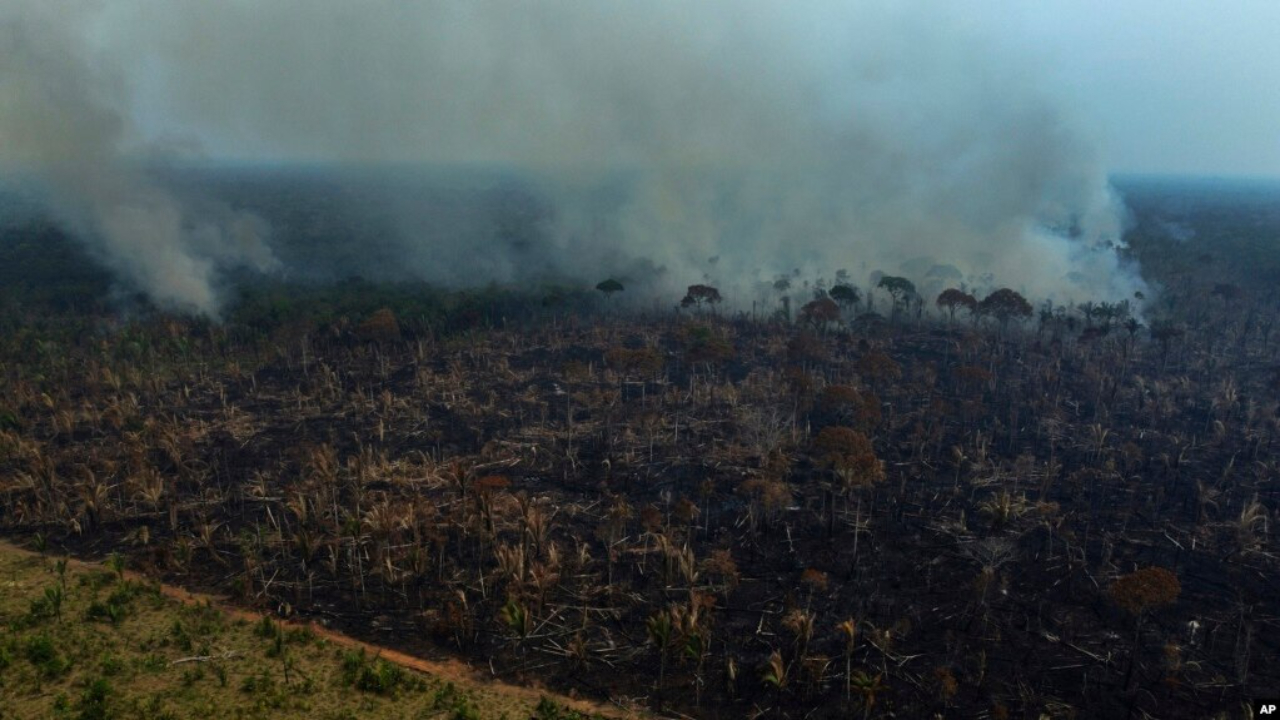
During that El Niño, 75% of tropical forests experienced extreme heat and drought at the same time for an average of six months. Hot conditions lasted about 18 months on average, and 80% of forests were drier than usual.
The finding matters far beyond the tropics. Tropical forests store huge amounts of carbon and help regulate rainfall, so prolonged heat and drought that slow their growth can feed back into the global climate.
A Preview Written in 2023 and 2024
The 2023 to 2024 El Niño ran from about June 2023 to roughly June 2024 and overlapped with the warmest year on record globally. Parts of the Amazon experienced about two years of unusual drought, and river levels at Manaus, Brazil, fell to their lowest since records began more than a century ago.
The team analyzed 12 observational datasets on heat and drought covering the past 25 years and nearly 16 million square kilometers (about 6.2 million square miles) of tropical forest. They defined hot months as those about 0.5 degrees Celsius (0.9 degrees Fahrenheit) warmer than normal.
Co-authors include researchers from Ghent University, France's Laboratory for Climate and Environmental Sciences, the University of Campinas in Brazil and Wageningen University in the Netherlands. They then used 24 Earth system models across a range of emissions scenarios to estimate how often such conditions might occur in any given year through 2100. The 2043 date is an average across all the models.
Heat Is Clear, Drought Is Less Certain
The heat projections were consistent. Even in the most optimistic case, with carbon neutrality reached by 2075, the high annual temperatures of 2023 and 2024 become at least six times more likely in all tropical regions by 2100 than they were over the past 25 years.
Drought projections varied more widely between models. Asia will likely see less frequent drought, according to the study. For the Amazon under a high-emissions scenario, the low rainfall of 2023 and 2024 could become up to nine times as likely in a given year.
Lead author Johanna Van Passel of Ghent University's Q-ForestLab said the timeline surprised her. "This is already happening in 20 years — that was very striking," she said in the AGU release.
The stakes for trees are physical. Under drought, trees close the tiny pores in their leaves to save water, which can halt their carbon uptake, and heat adds its own stress. Van Passel described the bind as trees either dying from lack of water or dying from heat.
An Evidence Check on the Projection
The study is a peer-reviewed modeling analysis paired with observational data, published in Earth's Future. It projects how likely certain conditions become, not what will happen in any specific year. The release summary refers to moderate-emissions scenarios, while the body text says the 2043 date applies to any scenario less optimistic than carbon neutrality by 2075, so readers should treat the exact year as an average with a range around it.
The heat finding is more robust than the drought finding — a key distinction, since models disagree more about rainfall. The study does not attribute any single event to climate change, and it does not forecast forest dieback by a particular date.
The authors declared no conflicts of interest. The release did not list funding sources.
Distant Forests, Global Carbon and Rainfall
Tropical forests influence weather and climate far from where they grow. In the Amazon, water released by trees supplies up to 30% of the region's rainfall, according to the release, so stressed forests can mean less rain and more stress in a feedback loop.
The carbon link reaches every country. When drought and heat shut down photosynthesis, forests absorb less carbon dioxide, leaving more in the atmosphere. That affects the long-term warming that drives heat waves, sea level rise, and wildfire risk in the United States.
There is also a human toll. Van Passel noted that many people living in tropical forests depend on them directly, and that during the Amazon drought some communities could not receive food because rivers used for transport ran too low.
The timing makes the study especially relevant. Nature World News reported in September that El Niño is heading toward historic strength, raising the prospect of another round of El Niño-driven heat and drought in parts of the tropics in the coming months.
Van Passel said the outlook is difficult but not hopeless, and that cutting emissions can make the outcome less severe. The study's own scenarios support that point, since heat becomes routine later and less often under lower emissions.
Readers can follow the developing El Niño through NOAA's Climate Prediction Center, which issues monthly updates on its strength and expected effects. The next steps include tracking how forests respond during the current El Niño and refining drought projections. The bottom line is that the record heat tropical forests faced two years ago may soon be typical, but how fast that happens still depends on choices about emissions.
What Readers Want to Know
What did the study find?
It found that the high annual temperatures tropical forests experienced in 2023 and 2024 could become the norm in most tropical regions by 2043 under scenarios less optimistic than carbon neutrality by 2075.
How bad was the 2023 to 2024 El Niño for forests?
Seventy-five percent of tropical forests faced extreme heat and drought together for an average of six months, and 80% were drier than usual.
Will droughts also become normal?
Drought projections were less certain. Asia may see fewer droughts, while Amazon droughts like 2023 and 2024 could become up to nine times as likely under high emissions.
Is 2043 a firm date?
No. It is an average across 24 climate models and describes how likely the conditions become, not a prediction for a specific year.
Why should Americans care?
Tropical forests absorb carbon dioxide and shape rainfall. When heat and drought slow them down, more carbon stays in the atmosphere, adding to global warming.
Can the outcome change?
Yes. The study's scenarios show heat becomes routine later and less often when emissions are lower.
© 2026 NatureWorldNews.com All rights reserved. Do not reproduce without permission.














 English (US) ·
 French (CA) ·