

 5 days ago
25
PROTECT YOUR DNA WITH QUANTUM TECHNOLOGY
Orgo-Life the new way to the future Advertising by AdpathwayA rare viper from the mountains of western Iran hunts by twitching the tip of its tail so it looks like a spider scurrying over rock. Now high-resolution 3D scans of a decades-old museum specimen have revealed what that lure is made of: enlarged, elongated scales that researchers say are unique among all living reptiles.
The spider-tailed horned viper, Pseudocerastes urarachnoides, was formally described by scientists in 2006. The new study, published in The Anatomical Record, scanned a specimen collected in 1968 and held at the Field Museum of Natural History in Chicago, according to Mongabay.
The work is a reminder of why natural history collections matter. A snake preserved nearly 60 years ago, decades before its species even had a scientific name, has now helped explain one of the strangest hunting tools in the animal world.
A Tail That Looks Like a Spider
The viper lives in semi-arid, rocky habitat in Iran's Zagros Mountains, where its body blends into the stone. Rather than chase prey, it lies still and wiggles a bulbous tail tip fringed with leg-like projections, drawing curious animals within striking range.
Field work has shown the trick works on birds. In a three-year study in Iran's Ilam Province, a team led by Behzad Fathinia of Yasouj University filmed the snake hunting for the first time, National Geographic reported in 2016. When a bird pecked at the lure, the viper struck in about 0.2 seconds. Adult snakes caught only migratory birds, mostly warblers, while younger snakes with less developed lures caught lizards.
One detail stood out to the researchers. No local, resident birds were caught during the study, only migrants passing through, though the reason for that pattern was not established.
Gordon Schuett of the Copperhead Institute, who was not involved in that research, called it "the most elaborate predatory lure known in snakes." Other snakes are known to wiggle their tail tips to attract prey, but Schuett's description reflects how far this species has taken the idea.
Scales Reshaped Into Legs
The new scans focused on what the lure is made of. Lead author Georgios Georgalis, an associate professor at the Polish Academy of Sciences' Institute of Systematics and Evolution of Animals in Kraków, said the structure is not a separate appendage at all.
"The tip actually consists of enlarged, elongated and modified scales, which are unique among all living reptiles,"Georgalis told Mongabay by email.
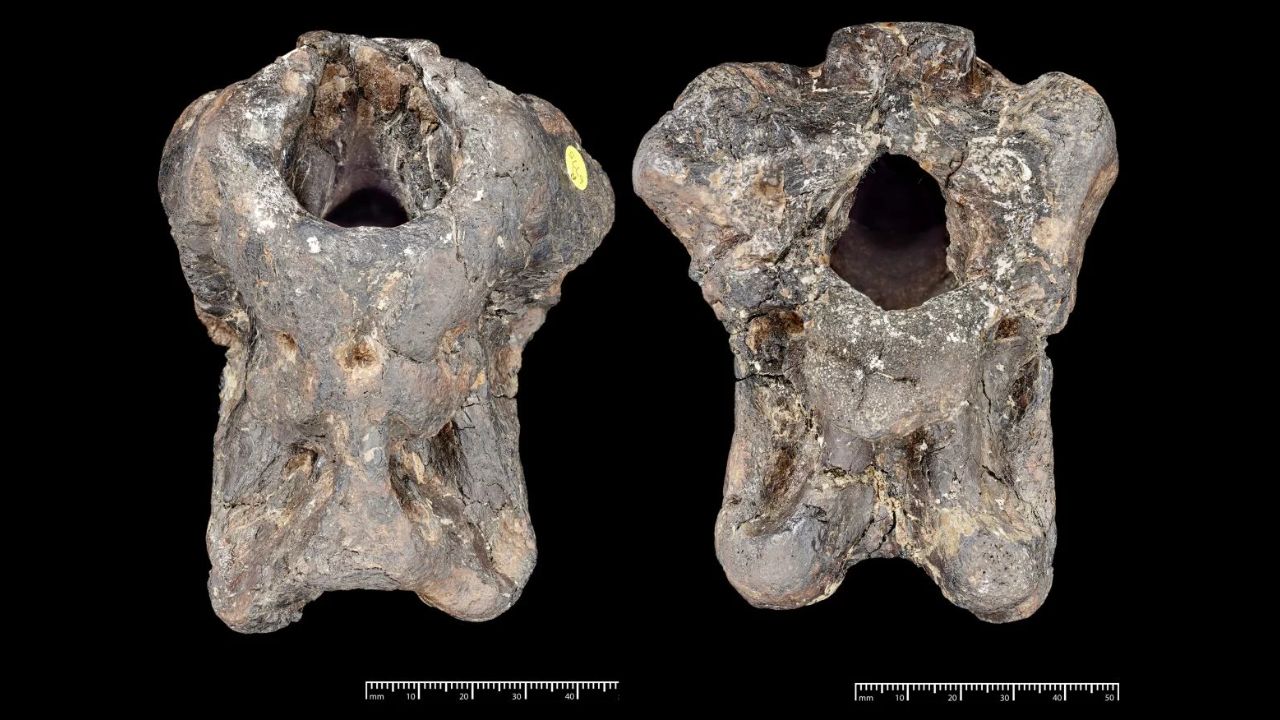
The scans also showed that the tail's bony core ends in a piece of fused bone. The researchers noted that the scale filaments loosely resemble structures seen in some Triassic and Jurassic relatives of dinosaurs and pterosaurs, but they attribute the similarity to convergent evolution, meaning similar shapes arose separately rather than through shared ancestry.
Convergent evolution is common in nature. Birds, bats and the extinct pterosaurs all evolved wings independently, for example, because flight favors similar shapes. The viper's filaments are a far smaller example of the same principle, with body structures that look alike for functional reasons rather than family ties.
The study describes the lure's anatomy, not how the snake moves it. Questions about the muscles that drive the twitching and how the snake times its strike remain for future work, and the findings come from a single preserved specimen.
Building a Lure One Step at a Time
Independent experts say the anatomy supports a step-by-step origin for the behavior. Hossein Nabizadeh, a herpetologist at Razi University in Iran and a member of the IUCN snake specialist group who was not involved in the study, said reptile skin has a very high evolutionary potential to form complex, appendage-like structures.
He described a likely sequence — first a change in tail color or simple tail movement, then the appearance of a few filament-like scales, and eventually the full spider decoy. In his view, the spider-tailed viper has reached the peak of that complexity.
Two close relatives offer a natural comparison. The Iranian horned viper, Pseudocerastes persicus, and Field's horned viper, Pseudocerastes fieldi, have not been studied in the same detail, though field observations suggest the Iranian horned viper has a less developed tail modification. Scanning those species could show whether they represent earlier stages of the same path.
A 1968 Specimen Earns Its Shelf Space
The 1968 specimen was collected long before scientists recognized the species, and it has sat in a museum collection ever since. Modern 3D imaging can now examine such specimens in fine detail without cutting them open, which matters for rare animals that are hard to study in the wild.
That value is part of an ongoing debate in the United States, where museums weigh the cost of maintaining huge collections. Nature World News recently reported on fears for 19 million specimens after Philadelphia's Academy of Natural Sciences closed its museum after nearly 200 years.
For readers, the spider-tailed viper poses no risk outside its small native range in western Iran. It is a species to admire from a distance, through field photos and scan imagery, and a reminder that some of nature's most elaborate tricks are still being decoded — in this case, from a jar on a museum shelf.
The bottom line is that 3D scans have shown the viper's spider is built from reshaped scales found nowhere else among living reptiles. The next steps are studying how the lure moves and comparing it with the snake's close relatives to trace how such a convincing decoy evolved.
What Readers Want to Know
What is the spider-tailed horned viper?
It is a rare venomous snake, Pseudocerastes urarachnoides, found in the Zagros Mountains of western Iran. It was formally described by scientists in 2006.
How does its lure work?
The snake stays still and twitches a tail tip fringed with leg-like projections, making it look like a moving spider. When a bird pecks at it, the viper strikes.
What did the 3D scans show?
The lure is made of enlarged, elongated and modified scales that the lead author says are unique among living reptiles, and the tail's bone ends in a fused piece.
What does the snake eat?
Field studies found adults catch migratory birds, mostly warblers, while younger snakes with less developed lures catch lizards.
Where did the scanned specimen come from?
It was collected in 1968 and is held at the Field Museum of Natural History in Chicago.
Is the snake dangerous to people?
It lives only in a small part of western Iran and poses no risk to people elsewhere. As with any viper, it should be left alone in the wild.
© 2026 NatureWorldNews.com All rights reserved. Do not reproduce without permission.
















 English (US) ·
 French (CA) ·